 CookEase
Understanding Boiling and Steaming
February 2026 | Educational Article
Water-Based Cooking Methods
Boiling and steaming are two fundamental cooking methods that use water as the primary medium for heat transfer. Both techniques have been used for centuries across various cultures and continue to be common in modern kitchens. This article provides an educational overview of how these methods work and their general characteristics.
Boiling Explained
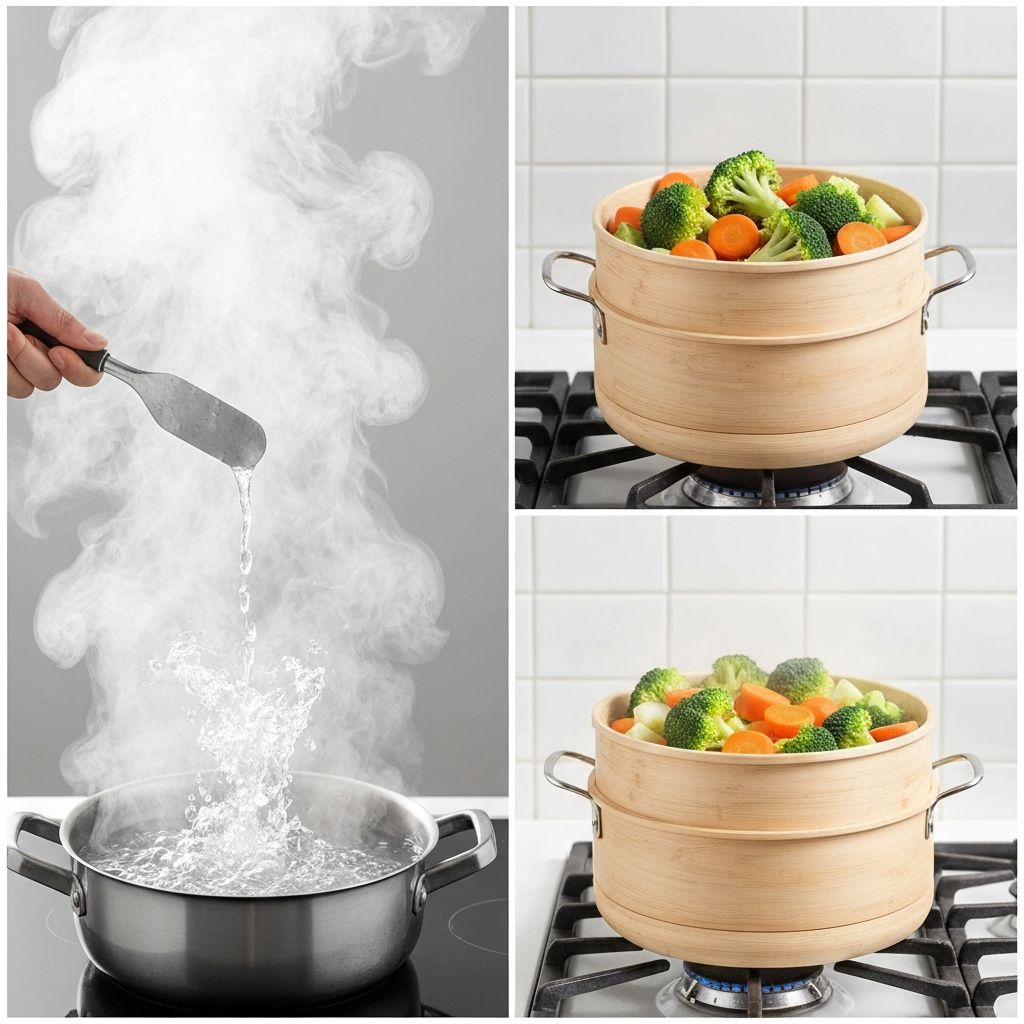
Boiling is a cooking method that involves immersing food in water or other liquid that is heated to its boiling point. At sea level, water boils at 100 degrees Celsius. The food is surrounded by the hot liquid, which transfers heat directly to the food.
Characteristics of Boiling
During boiling, the food is in direct contact with the cooking liquid. This contact allows for efficient heat transfer. The temperature remains relatively constant at the boiling point of the liquid throughout the cooking process.
Boiling is commonly used for vegetables, pasta, grains, and legumes. The method can soften food fibers and make certain foods easier to consume. Some nutrients may dissolve into the cooking water during the boiling process.
Variations in Boiling
The intensity of boiling can vary from a gentle simmer to a rapid boil. A simmer involves gentler heat with smaller bubbles, while a rapid boil creates vigorous bubbling. Different foods may be cooked using different boiling intensities.
Steaming Explained
Steaming is a cooking method where food is placed above boiling water, and the steam rising from the water cooks the food. The food does not come into direct contact with the water but is surrounded by hot water vapor.
Characteristics of Steaming
In steaming, the food is typically placed in a basket or container with holes that allow steam to circulate around it. The steam transfers heat to the food, cooking it from all sides. Since the food is not immersed in water, nutrients are less likely to dissolve away.
Steaming is often used for vegetables, fish, and dumplings. The method can help maintain the shape and texture of delicate foods. The cooking temperature in steaming is similar to boiling, as it depends on the temperature of the steam.
Steaming Equipment
Various tools can be used for steaming, including bamboo steamers, metal steaming baskets, and electric steamers. Each type of equipment works on the same basic principle of keeping food above boiling water while allowing steam to circulate.
Comparing Boiling and Steaming
Both boiling and steaming use water and heat to cook food, but they differ in how the food interacts with the cooking medium. In boiling, food is submerged in hot liquid, while in steaming, food is cooked by water vapor.
The choice between boiling and steaming can depend on the type of food, desired texture, available equipment, and personal preference. Some people prefer one method over another for certain foods based on the results they observe.
Nutritional Considerations
Both boiling and steaming can affect the nutritional content of food in different ways. Water-soluble vitamins may be lost to varying degrees depending on the cooking time, temperature, and amount of water used.
In boiling, nutrients can dissolve into the cooking water. Some people consume this water as broth or soup to retain these nutrients. In steaming, since the food does not contact the water directly, there may be less nutrient loss to the liquid.
The extent of nutritional changes varies depending on the specific food, cooking duration, and conditions. These are general observations about the methods rather than specific nutritional advice.
Common Applications
Boiling and steaming are used worldwide for various foods. Boiling is common for pasta, rice, potatoes, eggs, and many vegetables. Steaming is frequently used for broccoli, carrots, fish, dumplings, and certain desserts.
Different cultures have developed unique applications of these methods. Asian cuisines often feature steamed dishes, while European cuisines frequently use boiling for vegetables and grains. The methods are versatile and can be adapted to many types of food.
Educational Context and Limitations
This article provides educational information about boiling and steaming as cooking methods. The content describes general principles and characteristics of these techniques for informational purposes only.
This information does not constitute nutritional advice, dietary recommendations, or personalized cooking guidance. Individual needs, preferences, and circumstances vary widely. Decisions about food preparation should be based on personal considerations and appropriate professional consultation when needed.
Educational content only. No medical services. No promises of outcomes.